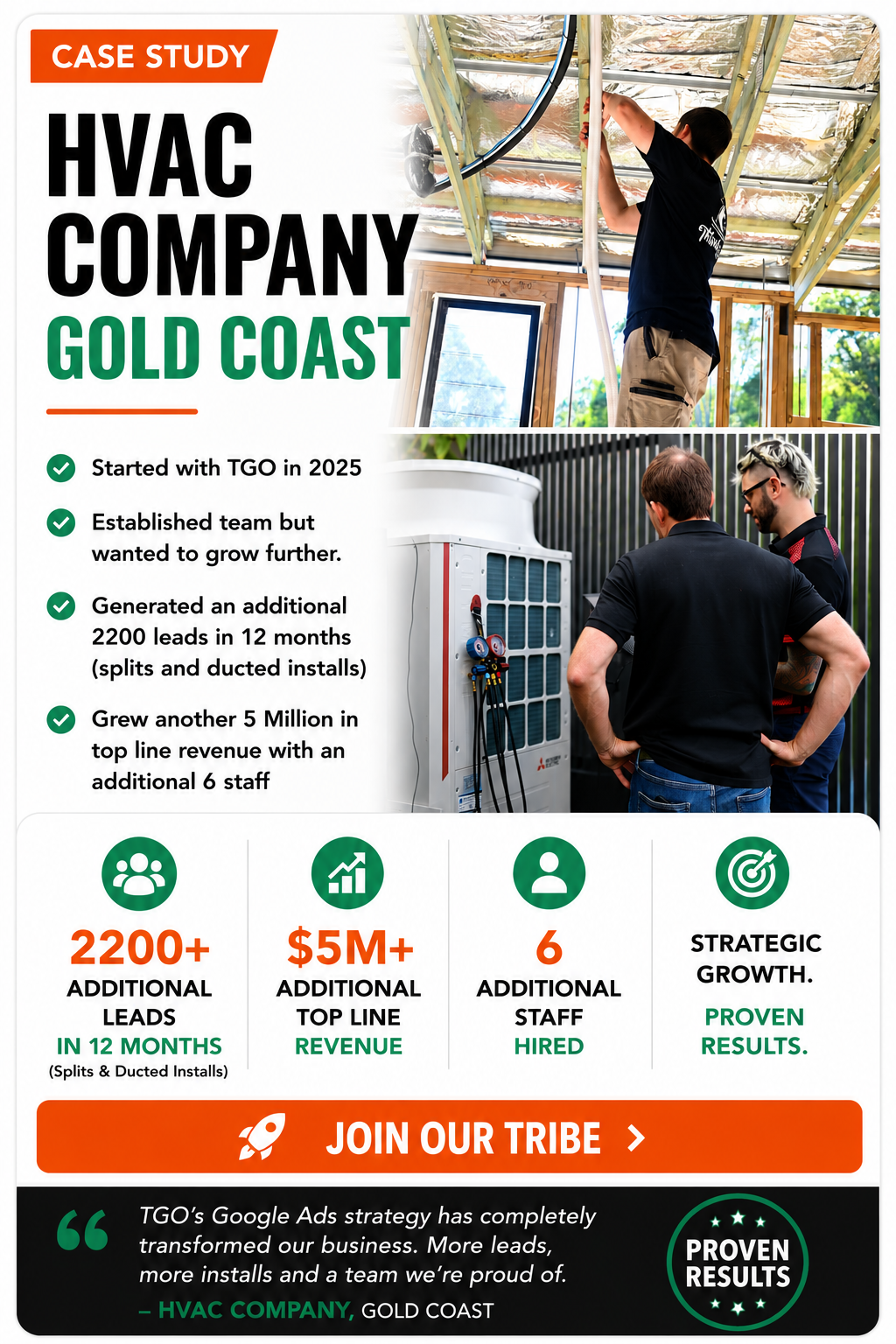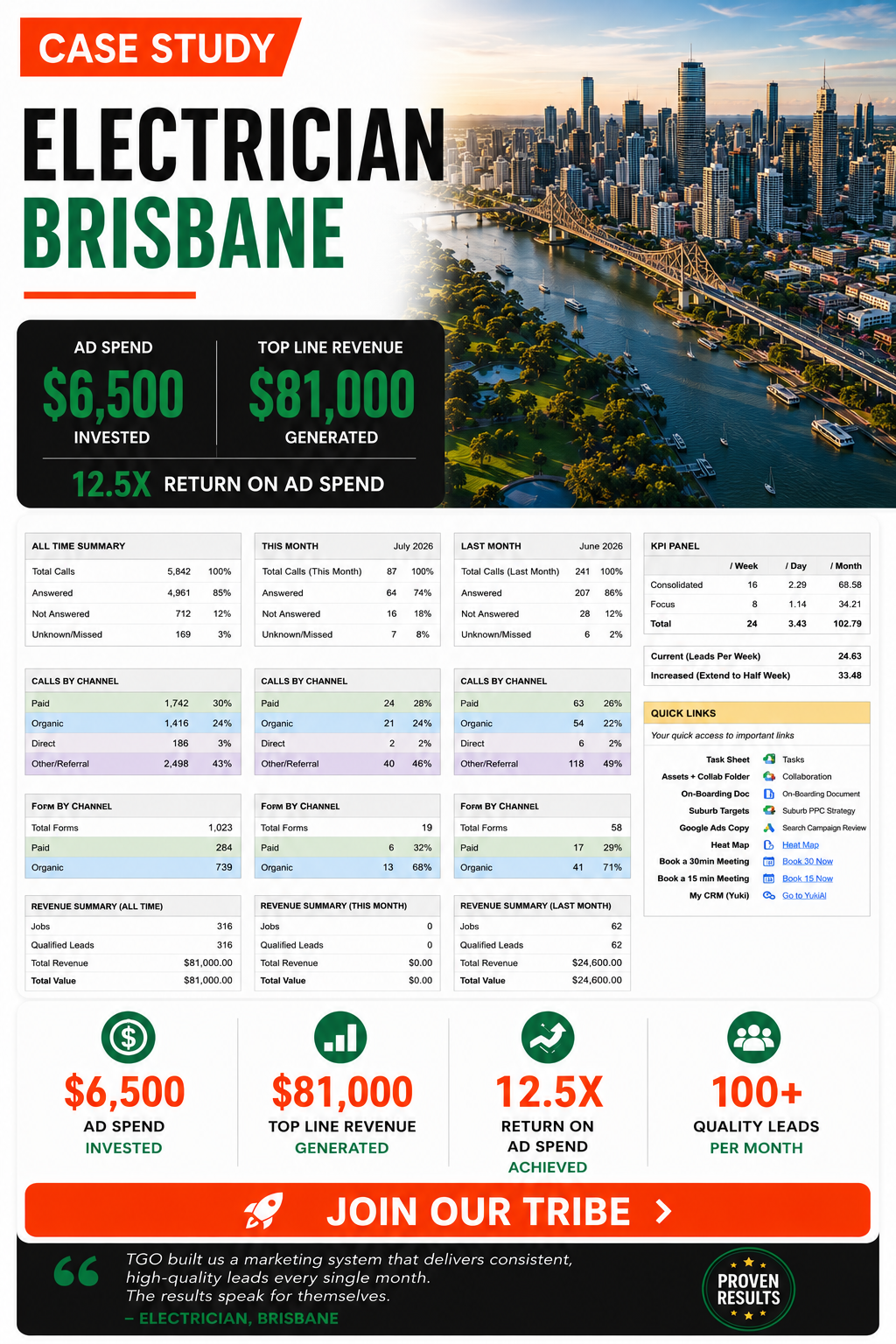
Not all suburbs are created equal when it comes to growing a profitable plumbing, electrical or HVAC business.
You could be spending thousands of dollars every month on Google Ads, generating plenty of enquiries, and still be targeting areas that aren’t delivering the best return.
The question isn’t just where are your leads coming from?
It’s which suburbs are actually making your trade business money?
If you’re running an established trade business, understanding the profitability of your service areas could be one of the most valuable changes you make to your marketing strategy.
Why Your Google Ads Location Targeting Matters
Most trade businesses set up their Google Ads campaigns to target a broad service area.
That might include 20, 30 or even 50 suburbs.
But here’s the problem.
Not every suburb generates the same quality of work.
Some areas might produce:
- High-value installations and profitable projects.
- Customers who are ready to book.
- Jobs close to your existing technicians.
- Repeat business and ongoing maintenance opportunities.
Other suburbs might generate plenty of enquiries but result in smaller jobs, longer travel times or customers who are simply shopping around.
More leads don’t automatically mean more profit.
That’s why reviewing your Google Ads performance by location is so important.
1. Identify Which Suburbs Generate Qualified Leads
Start by reviewing your Google Ads location reporting.
Rather than simply looking at impressions, clicks and conversions, you want to understand how many genuine opportunities each area is generating.
Look at:
- Advertising spend by suburb.
- Number of enquiries generated.
- Qualified leads.
- Booked jobs.
- Revenue generated from those jobs.
It’s also important to distinguish between the geographic locations reported by Google Ads and the actual job addresses recorded in your CRM or job management system.
Google Ads location data doesn’t always identify the suburb where the work was completed.
Connecting these two sets of data gives you a much clearer picture of which locations are genuinely producing valuable jobs.
2. Calculate Your Customer Acquisition Cost by Area
One of the most useful numbers to understand is your Customer Acquisition Cost (CAC).
This tells you how much advertising money you’re spending to acquire a paying customer.
For example:
| Suburb A | Suburb B | |
| Google Ads spend | $1,000 | $1,000 |
| Qualified leads | 20 | 30 |
| Booked jobs | 10 | 5 |
| Ad spend per customer | $100 | $200 |
Suburb B generates more enquiries, but Suburb A converts more of those enquiries into actual paying customers.
In this simplified example, Suburb A costs half as much in advertising per acquired customer.
That’s a significant difference.
And it’s exactly why focusing on the cheapest leads can be misleading.
Note: This example uses advertising spend only. Your complete acquisition cost may also include agency fees and other marketing expenses.
3. Look Beyond Lead Volume and Focus on Job Profitability
Customer acquisition cost is only part of the picture.
You also need to understand how profitable the jobs are.
Imagine an electrician generates ten small repair jobs in one suburb but only three switchboard upgrades in another.
Those three upgrades could potentially produce significantly more gross profit than the ten smaller jobs.
The same applies to HVAC businesses.
A suburb generating two ducted air conditioning installations might be more valuable than an area producing fifteen enquiries for minor repairs.
When evaluating suburb performance, consider:
- Average job value.
- Gross profit per job.
- Technician travel time.
- Labour and material costs.
- Opportunities for additional work.
- Your team’s available capacity.
The most profitable suburb isn’t necessarily the one generating the most phone calls.
It’s the one delivering the strongest commercial return for your business.
4. Don’t Forget Travel Time and Technician Capacity
There’s another factor that many trade businesses overlook.
Travel time.
If your technicians are spending an extra hour driving between jobs, that’s time they could have spent completing paid work.
A suburb might look fantastic in your Google Ads reporting, but once you account for travel time, fuel, labour and scheduling inefficiencies, the profitability could look very different.
This is particularly important for reactive plumbing and electrical businesses where technicians may complete multiple jobs each day.
Sometimes focusing on suburbs closer to your existing customer base can help improve scheduling efficiency and overall profitability.
5. Don’t Switch Off a Suburb Too Early
Before you start excluding suburbs from your Google Ads campaigns, there’s something important to understand.
You need enough data to make a reliable decision.
If you’ve only generated three enquiries from a suburb, that’s probably not enough information to decide whether the area is profitable.
One expensive click or one missed booking could distort the numbers.
Instead, review performance over a meaningful period and compare the results against your business’s typical conversion rates and sales cycle.
You should also consider whether poor performance is caused by the suburb itself or another issue, such as your landing page, keywords, service offering or lead follow-up process.
Making changes too quickly can mean switching off areas that could have become valuable sources of profitable work.
6. Use Your Job Management Data to Make Smarter Google Ads Decisions
This is where your marketing becomes much more powerful.
If you’re using job management software such as simPRO or ServiceM8, you may already have valuable information about the jobs you’re winning.
Imagine being able to analyse:
- Which suburbs generate the highest-value jobs.
- Which enquiries turn into paying customers.
- Which services generate the strongest gross profit.
- Which locations have the lowest acquisition costs.
- Where your technicians are completing the most profitable work.
By connecting your advertising performance with your CRM or job management data, you can start making decisions based on actual business outcomes.
With the right conversion tracking and integrations, you can also send qualified lead or completed-job conversion information back to Google Ads, helping its automated bidding systems optimise towards more valuable outcomes.
Rather than telling Google that every enquiry is equally valuable, you’re helping it understand which conversions matter most to your business.
Stop Chasing More Leads. Start Chasing More Profitable Jobs.
If you’re spending thousands of dollars every month on Google Ads, you need to know where that investment is generating the best return.
Not just which suburbs produce the most clicks.
Not just which areas generate the cheapest enquiries.
But which locations are delivering profitable, booked work.
Because growing a successful trade business isn’t about being everywhere.
It’s about being in the right places, attracting the right customers and winning the right jobs.
Watch: Which Suburbs Are Actually Making Your Trade Business Money?
In our latest YouTube video, we break down how to analyse your Google Ads location performance, calculate customer acquisition costs and identify the suburbs worth investing more money into.
▶️ [Watch the full video on YouTube]
Want More Profitable Leads From Google Ads?
At TradiesGO, we help established plumbing, electrical, HVAC and other trade businesses turn their marketing investment into qualified enquiries, booked jobs and profitable growth.
If you’re ready to understand what’s really working in your marketing, let’s talk.